To Love Means Giving a Child Your Time. Why a Parent’s Presence Matters More Than the Best Extracurricular Activities
Every parent wants to be a good educator. We want to support our children, help them develop their talents, teach them independence, and prepare them for adult life. However, in the rush of daily duties, we often forget about something extraordinarily important—the time we can give them.
To start, it is worth recalling the beautiful words from the adventures of Winnie-the-Pooh: "Promise me you'll always remember: You're braver than you believe, and stronger than you seem, and smarter than you think." This piece of advice can also be an inspiration for parents. To help a child believe in their own strength, however, we must remember one thing: we must be a role model for them ourselves.
Home – The First and Most Important School of Life
It is said that a child learns the most at home, among their closest family. After all, a child is an excellent observer. They watch how parents treat each other, how they behave in difficult situations, and how they support one another in daily chores.
They notice when Dad skips a nap, even though he is tired, to listen to them read a text assigned at Polish Saturday school. They see when he can put off watching a match to help Mum make dinner or work in the garden. It is precisely these small, everyday situations that teach a child responsibility, cooperation, and mutual respect.
Shared Daily Chores Build a Bond
It is worth involving children in ordinary family life. Pinching pierogi together, peeling carrots, or folding their own laundry can become not only a lesson in independence, but above all, an opportunity to spend time together. Not everything has to be based on orders and commands. A child can naturally participate in household activities, observe adults, and gradually take responsibility for their own tasks.
Parents have many things to take care of after returning from work. However, this does not mean they have to close the door to their world or send the child to their own room. You can clean, cook, or organise drawers while allowing the child to be right beside you. During this time, they can draw, do homework, build with blocks, glue models, or read aloud. It is important not to separate the child's world from the adult world too early.
When Parental Presence Is Missing, Space Opens Up for Other Role Models
When adults disappear from a child's field of vision, that empty space is increasingly filled by media, influencers, and strangers met in online chat rooms. Children then enter a world full of information, not always appropriate role models, and content they are unable to evaluate on their own.
That is why it is so important that we, as parents, are present, attentive, and able to talk with our children. We should help them make sense of the world around them, explain what they do not understand, and build a relationship based on trust. It is worth asking ourselves: will our child come to us when difficulties arise? Will they be able to talk about their fears, problems related to growing up, or other struggles? Trust is not built in a moment of crisis. It is built every day, from the very first moments of a child's life.
The 7-7-7 Rule – Small Moments, Great Significance
Educational communication should be based on love, trust, and dedicating time to the child. A child left to their own devices may not feel safe and may struggle to build self-esteem and develop their potential. How do we find time for conversation and closeness when everyday life is so intense?
A simple method called the 7-7-7 rule can be an inspiration. It is not about the mystical meaning of the number, but about consciously introducing three short moments of closeness during the day:
- 7 minutes during breakfast – for talking, showing interest in the child's plans, and starting the day together.
- 7 minutes after returning from school – for listening to what happened during the day, without rushing or judging.
- 7 minutes before sleep – for closeness, a smile, a joke, a hug, and a calm face-to-face conversation.
That is only 21 minutes a day. Very little, yet it can become the beginning of a beautiful family ritual.
Extracurricular Activities Aren't Everything. A Child Must Learn About Life
Parents often bend over backwards to give their children the best possible start. They sign them up for swimming, basketball, tennis, dance, or other classes that develop talents and interests. Each of these activities can bring many benefits.
However, it is worth remembering that preparing a child for future life roles is equally important: as a partner, husband, wife, mother, father, or responsible employee. Extracurricular activities alone will not teach this. A child acquires the foundations of these skills primarily at home—through observation, shared experiences, daily duties, and relationships with loved ones.
It is also worth remembering to maintain boundaries. Children should not be unnecessarily involved in adult problems that they do not understand and that can negatively affect their emotional development.
Parental Love Also Needs Healthy Boundaries
Dedicating time to a child is extremely important, but it does not mean giving up on yourself and all your own needs. It happens that parents, especially mothers, lose themselves in self-sacrifice. They give up rest, hobbies, and their own lives, and over time frustration builds up inside them: "I did so much for you, and now this is how you treat me!"
Meanwhile, building a relationship is not about constant self-sacrifice, but about conscious, quality presence. What matters is not just the number of hours spent together, but above all, the quality of attention we give the child. According to the author, it is worth making sure to have 15–30 minutes of full focus on the child every day, face to face, without distractions or other duties. This is a time when the child feels important, noticed, and heard.
The Father's Role in Upbringing – An Irreplaceable Presence
The extraordinarily important role of the father in the family cannot be overlooked. A responsible, involved dad is a source of support, authority, and a role model for the child. It is worth reflecting on the words that are so often spoken in everyday conversations: "In a minute," "later," "tomorrow," "next time," "not now," "I don't have time," "I'm tired."
Of course, every parent has the right to be tired and to rest. However, if such responses become an everyday occurrence, the child may start to feel that there is always something more important than them. Conscious fatherhood, just like conscious motherhood, requires reflection on how much time we truly dedicate to our children. Do we dream of enterprising, educated, street-smart, and happy children? Let's build these values today. Not tomorrow, not later, but now.
Time – The True Measure of Parental Love
We can provide our children with good schools, extracurricular activities, nice clothes, toys, holidays, and financial security. We can accumulate money, buy houses, and win awards and honours. However, none of these achievements can replace a parent's presence for a child.
The most important thing is for them to know they can count on us. That we will find time to listen to them, be together, answer questions, and support them in difficult moments. Because to love means to be there. Truly be there—with attentiveness, patience, and an open heart. Time is one of the most precious gifts we can offer a child. And perhaps it is precisely time that is the true measure of parental love.
About the Author
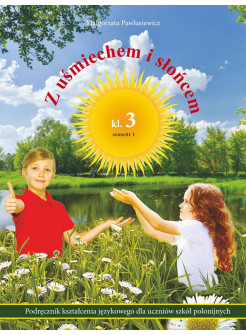
Małgorzata Pawlusiewicz – a graduate of the Jagiellonian University in Kraków, educator, special needs educator, and methodologist. Former collaborator with the Jagiellonian University (UJ), the Pedagogical University (UP), and educational counselling centres in Kraków. A Polish Saturday school teacher, author of textbooks for Polish children living abroad aged 4 to 12. Passionate about deepening knowledge about parenting and education.
See also:







 English GB
 Polski