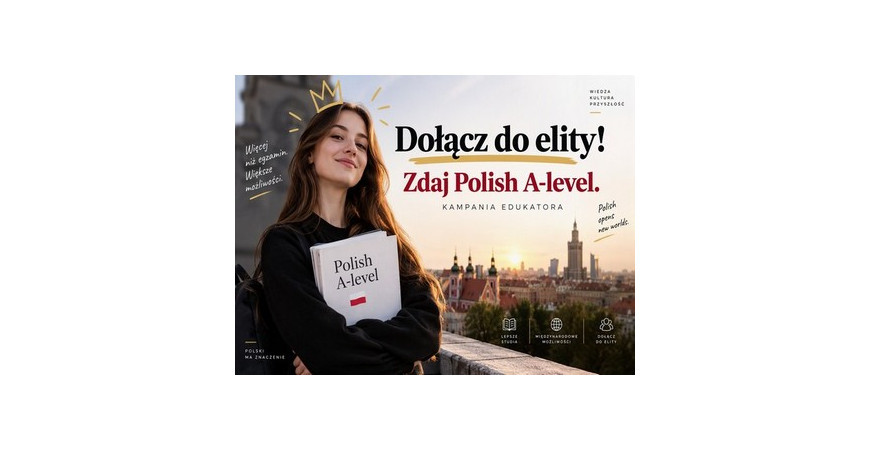
Join the elite! Pass the Polish A-level. Educator's Campaign
Małgorzata Bugaj-Martynowska talks to Izabela Olendzki, an employee of the "Czytam i mówi po polsku" bookstore, a promoter of bilingualism, and a mother of bilingual boys and... a bilingual Labrador.
Everyone in the UK has known the "Czytam i mówi po polsku" bookstore and its founder, Małgorzata Wiśniewska, for at least a decade. You also found a path to promoting the Polish language through your work with this unique bookstore in the UK.
At the bookstore, I am responsible for the brand's online visibility, primarily on social media, and for implementing publishing projects. I promote content online about bilingualism, learning Polish as a foreign language, and the real benefits of taking GCSE and A-level Polish language exams. I prepared my son for the exam myself. I collaborate with authors, teachers, and parents to jointly support the education of future generations of Polish speakers. We specialize in distributing books for children and young adults, Polish textbooks for Polish Saturday schools, and educational and self-help literature, supporting Polish families and teachers.
We are distinguished by fast shipping from a warehouse in the UK, professional customer service, and specialization in products that meet the specific needs of the Polish community abroad. From the beginning, we have collaborated with specialists who work with bilingual children. Our business is based on years of experience, a broad network of collaborations, and effective distribution strategies, and our books and materials reach over 200 Polish Saturday schools in the UK and Europe, as well as over 5,000 individual clients who actively support their children's Polish education.
This is an impressive aid in teaching Polish at your fingertips, starting from a very young age.
It's best to begin education in Polish as early as possible, even before a child is born. Language learning begins with understanding, and hearing develops prenatally. We can therefore speak to our child, sing to them, and read to them in Polish even during pregnancy. For younger children, learning through play is crucial: rhymes, songs, games, and language activities that naturally stimulate speech.
It is also extremely important for parents to speak Polish to their child as much as possible. During school age, we often observe a shift in the language balance towards English. It is then particularly important to consciously strengthen contact with the Polish language through conversations, asking questions, reading together, and developing interests in Polish.
Everything begins in the family…
Parents are a child's first and most important teacher. Language learning always begins at home: through conversations, play, games, discussions, and daily contact with the language. It is also at home that we develop good habits, such as reading books in Polish daily or writing greetings cards and letters.
If a parent needs support or sees a child struggling, it is worth considering a Polish Saturday school. There, children learn to read and write in Polish: skills that are sometimes difficult to systematically develop at home. Contact with peers in a similar situation and the cultivation of Polish traditions and holidays are also of great value.
It's also important for parents to expand their knowledge of bilingualism and use reliable sources. Just as we prepare for childbirth or parenthood, it's also important to consciously plan a child's language development.
Bilingualism offers numerous benefits.
It supports brain development, improving communication and cognitive skills, and abstract thinking. It delays brain aging and reduces the risk of Alzheimer's disease. It also develops metalinguistic ability, or awareness of how language functions. Bilingual people are often characterized by greater openness, tolerance, and a broader perspective on the world.
Children raised in the British Isles benefit from additional benefits, especially for the future.
For children in the UK, the opportunity to take GCSE and A-level exams in Polish is a huge advantage. These exams are treated equally to other foreign languages and can significantly aid in college and university admissions.
To support Polish families, I created a video on this topic entitled "How a parent can help their child pass their GCSE Polish exam." My son passed his GCSE Polish exam with a grade of 8, his highest grade of any subject. This became a source of immense pride for him, a real sense of achievement, and formal confirmation of his language skills.
While preparing for the exam, we also had many conversations that rarely arise in everyday life: about homelessness, social issues, volunteering, the challenges facing today's youth, and social media.
This was one of the less obvious, yet very valuable benefits of the GCSE Polish language: a deeper connection and a space for mature, meaningful conversations. The exam also strengthened his pride in his identity: in the Polish language in the UK, in his emigration experience, and in the fact that the language inherited from his parents can become a source of educational and personal success, building self-esteem.
Watch the video:
Children in the UK have the opportunity to take the Polish language Matura exam and, at the next stage of education, the Matura exam, which is a state-mandated confirmation of competence, knowledge, and skills in using and proficiency in the language.
The A-level in Polish formally confirms high linguistic competence and knowledge of Polish literature, history, and culture. It provides additional points for university admissions and opens doors to many career paths, including translation, education, culture, and film studies. It is also a huge asset in modern industries: international corporations, logistics, management, marketing, and sales. I also hear many stories from parents whose children have been accepted into their dream universities thanks to the extra points they earned in their A-level Polish exam. Young people sometimes choose to study in Poland precisely because they know the language and feel confident in it.
However, few people take advantage of this opportunity, nor do they take advantage of ensuring that new generations speak Polish. Bilingualism is a growing myth…
The most common myths I encounter include the belief that Polish is "useless," that teaching children Polish isn't worth it if you don't plan to return to Poland, that Polish is too difficult, or that there's no time for classes or Saturday school. However, research and practice show that bilingualism doesn't harm a child's development—on the contrary, it's a huge asset for the future. Knowledge of Polish offers real benefits: greater educational opportunities, a wider range of career paths, and potentially higher earnings. It's also a skill that distinguishes you in the job market.
It's also about heritage and building your identity.
Relationships with Polish identity can vary: some children feel more British, others identify more strongly with Poland. However, awareness of one's origins provides a sense of rootedness, self-confidence, and helps one navigate today's challenging world. Separating a child from their roots can lead to shame or resentment towards their own culture. Therefore, it's worth sharing with children about our family history, important historical events, and the contribution of Poles to British history.
Parents who invest in their children's linguistic future are looking for advice, recipes, and specific tips.
We published the book "Recipe for Bilingualism," but it's worth mentioning a few basic ingredients for success: a parent's attitude, active contact with the minority language, consistency, and an ambitious goal. Each family adds their own "magic ingredient" – bonding, love, and positive emotions associated with the language. In practice, not everything always works out right away. Sometimes you have to "bake the cake with sourdough" several times to find the best balance. The most important thing is not to give up, seek support, and be both understanding and consistent. It's definitely worth ensuring that children not only learn the language but also pass the exam. This is a real confirmation of language competence, a huge educational asset, and an investment in the child's future.
Therefore, we continue to work on awareness, which is being carried out by the bookstore, and for the past three years by Edukator, as part of a campaign promoting exams and the Polish language.
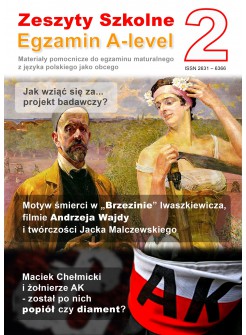
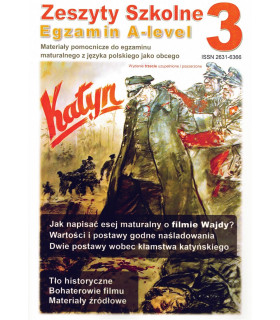
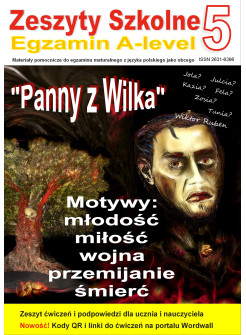
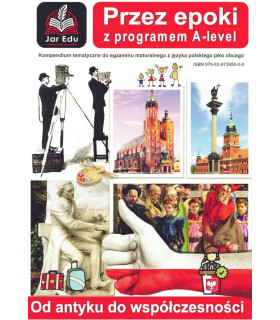
This work is much needed. Currently, approximately 1,000 people take Polish A-level exams and approximately 9,000 take Polish GCSE exams, with a population of approximately 700,000 Poles in the UK. Knowledge of these opportunities should reach parents, teachers, and students themselves. We provide reliable educational materials for A-level exam preparation. Our goal is to provide real support to parents and teachers in their daily work with children.
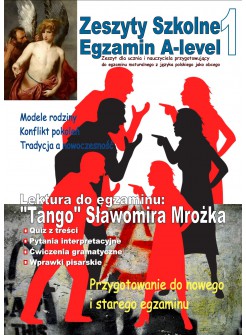
We also distribute educational materials for GCSE exam preparation. We also supply required reading for the Polish A-level exam. At the request of teachers, we have imported the required volumes.
We also want as many Poles in the UK as possible to know about the possibility of taking exams, which is why we regularly organize meetings with authors and teachers to promote access to knowledge on this topic.
***


 English GB
 Polski