The Polish A-level exam: why is it worth taking and how to achieve a high grade?
The Polish A-level exam is becoming increasingly popular among Polish youth. Statistics show an upward trend – 1,160 people took the exam in 2025.
This is a clear signal that Polish is no longer "just the language of the home" but is becoming a real educational asset.
Despite this, the leap between GCSE and A-level is huge, and the latter requires thorough preparation.
Is it worth taking the next step after GCSE? What is the level of difficulty? And what can you do to achieve an A or A* grade?
Here's a practical guide for parents, teachers, and students.
Why is it worth taking the Polish A-level?
Many students and parents wonder whether Polish, as a foreign language, counts at British universities. The answer is: absolutely yes.
UCAS Points: British and American universities treat Polish as a fully-fledged foreign language, on par with French or Spanish. Points earned in this exam can significantly strengthen a candidate's position in the admissions process.
As an Admissions Advantage: In all fields, an additional foreign language in the personal statement is considered valuable.
Studying in Poland: Although each university has its own rules, having an A-level in Polish can exempt a student from the so-called "pre-requisite" language requirement, confirming a high level of language proficiency.
The Gap Between GCSE and A-Level Polish in the UK
It should be openly stated that there is a huge gap in terms of content between GCSE and A-Level.
The GCSE focuses on communication – the ability to cope in a restaurant or shop.
The A-Level is an academic level. It requires knowledge of historical, sociological, and literary terminology.
Interestingly, the A-Level does not have an oral exam. The entire exam consists of three papers, which together last a whopping 7 hours. Students must write a total of four essays, as well as translations and summaries. This is a completely different level of language work.
Exam Structure and Challenges in the Polish A-level Exam
The Polish A-level exam consists of three parts:
1. Paper 1: Reading Comprehension, Writing, and the Individual Research Project (IRP).
2. Paper 2: Literature and Film – the student writes two essays based on two selected works (a reading and/or a film).
3. Paper 3: Reading, Listening, and Translating into Polish.
The Individual Research Project (IRP) is an independent research project. The student chooses one of four topics:
The Resistance Movement in Poland,
Communism in Poland,
Racism in Poland,
Tourism in Poland (understood as geography and infrastructure, not just tourist attractions).
Readings and Films for the Polish A-level Exam
The selection of materials for Paper 2 is strictly defined. The student chooses two works from the reading list and two films from the list below:
"Tango" by Sławomir Mrożek
"The Maids of Wilko" and "The Birch Wood" by Jarosław Iwaszkiewicz
"Ashes and Diamonds" by J. Andrzejewski
"Katyń" by Andrzej Wajda
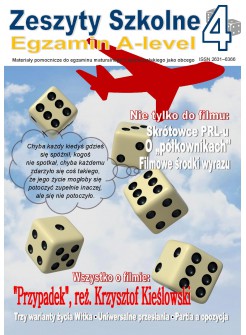
"Blind Chance" by Krzysztof Kieślowski
The most frequently chosen combination by students is "Tango" by Sławomir Mrożek and the film "Katyń" by Andrzej Wajda. Other options include Iwaszkiewicz's short stories ("The Maids of Wilko" and "The Birch Wood"), Andrzejewski's "Ashes and Diamonds" by Andrzejewski, and the film "Blind Chance" by Kieślowski. It's worth noting that these works require a very detailed knowledge – a superficial knowledge of the content won't allow you to write a good essay.
How to get a high grade at A-level in Polish (A or A*)?
1. Start preparing early. The optimal time is two years. Don't leave everything to the final year.
2. Build topical vocabulary. There is no set vocabulary list at A-level. You need to systematically work on social, political, cultural, and historical vocabulary.
3. Practice writing essays. A high grade depends on: structure, a clear thesis, logical argumentation, linguistic accuracy, and precise vocabulary.
An essay is not a narrative. It's an analysis.
4. Take a research project seriously. Students choose their own topic, research their own materials, and prepare their own content. The teacher's role is to provide support, not ready-made answers.
5. Read challenging texts in Polish. Journalistic articles, reports, and essays are the best training for reading comprehension, summarizing, and translating.
How can parents and teachers help?
Preparing for A-level should take at least two years. Parents can support children by:
Providing legal materials: purchasing books and accessing films.
Using trips to Poland: visiting places related to research projects (e.g., Wawel Castle, museums, national parks) and talking with grandparents about the communist era.
Continuing studies immediately after GCSE: taking a break in Year 11 often causes students to lose the reading habit and not return to learning Polish.
Teachers, however, play a key role in liaising with English schools, which often don't adhere to application deadlines for minority language exams as closely as they do for core subjects.
Common mistakes made by students taking A-level Polish
❌ 1. "I got a 9 at GCSE, so A-level will be easy too."
This is the most common trap. A high GCSE grade doesn't guarantee success without consistent work.
❌ 2. Superficial knowledge of the text
The student must: know the details of the plot, understand the historical context, analyze motifs and symbols, and develop arguments.
For example, analyzing the drama Tango requires an understanding of the Theatre of the Absurd, and the film Katyń requires knowledge of the historical context.
❌ 3. Ignoring "easier" sections of the test
Reading and listening tasks can be tricky. Errors result from: inattention, lack of familiarity with difficult vocabulary, or reading too quickly.
❌ 4. Problems with summarizing
A 90-word limit means: not a single word more.
Students often exceed the limit, failing to score all the points because they don't practice shortening their sentences.
Is A-level Polish for everyone?
No.
The A-level Polish exam is a challenge, but also a tremendous opportunity. It's for students who are ready for academic work, want to develop their language skills at a high level, and are strategic about their future. It requires moving beyond their native Polish into scientific and literary Polish.
But for those who take the challenge, it can become one of the strongest points on their educational CV.
With appropriate support and an early start to preparation, students can earn a valuable certificate that will open doors to prestigious universities.
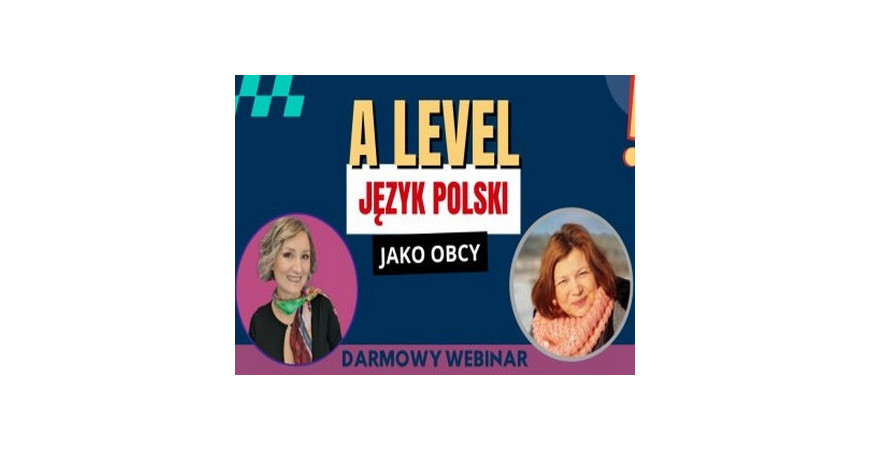
This text is based on the webinar: A-level Polish exam. How to get a good grade?
Renata Jarecka, author of preparation materials for GCSE Polish and A-level Polish:
GCSE Workbooks 1
GCSE Workbooks 2
Polish Speaking GCSE, Theme 1: Identity and Culture
Polish Speaking GCSE, Theme 2: The World Around You
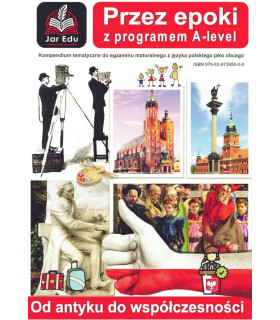
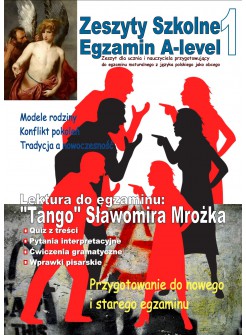
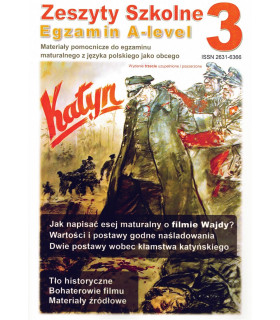
A-level Workbooks
Watch the webinar
Questions from participants at the Polish A-level meeting
I am asking for your help as I am unable to find a college where my daughter can take her A-level exam, as her college doesn't allow her to do so. There is not a single college in our city that will give her a chance to take the exam.
I hope you found an exam center. As I mentioned in the webinar, you can either use the search engine on the AQA website or contact each secondary school or college offering A-level preparation. The application deadline for this year's summer exam session has passed, although you can still register your student by paying a higher late application fee. You can also take the exams at the Polish Examination Centre in London – the Polish Educational Society. Polish schools (so-called Saturday schools) are not permitted to conduct exams – only AQA-authorized examination centers can do so. In addition to these school-based centers (I'm referring to British schools), there are also private centers.
AQA A-level exam information
Polish Educational Society, Polish A-level examination center
How (as a parent) can I help my child born in the UK choose a topic for their project?
Currently, most young people taking A-levels were born in the UK, so this won't be helpful in choosing.
Students can choose from four topics: the resistance movement during World War II, communism, tourism, and racism. If you're interested in history, you should choose from the first two – specific knowledge is key here: facts, dates, and figures. Tourism is geographical knowledge, and the resistance movement is the most opinion-forming topic.
How much can you exceed the word count when writing an essay?
Students are not given a maximum word limit for essays, but a minimum. They can, and even should, exceed this minimum. In total, students must write four essays across all sections of the exam. In Paper 1, the project essay must be at least 300 words long; in Paper 2, each essay (based on the reading and film) must also be at least 300 words long; and the essay in Paper 3 – written based on two sources – must be at least 200 words long.
The upper word limit you're referring to applies to the summary tasks students write in Papers 1 and 3 – this task should not exceed 90 words. You can go slightly beyond this limit (until the thought is completed, i.e., to the nearest comma/full stop), but no more than 100 words.
What year is the GCSE exam?
GCSE exams usually take place in Year 11, but sometimes students take some subjects (especially foreign languages) earlier, usually in Year 10. At this time, neither AQA nor the Polish Educational Society recommends taking Polish earlier, as the exam requires a certain maturity level. I also agree that the best time to take Polish earlier is Year 10. At that time, it's realistic to encourage students to continue their studies and prepare for A-levels, also over a two-year period. The first year (Y11), when a student is overwhelmed with other exams at school, can be devoted to the Polish language curriculum. In Year 12, they can focus on film, a research project, and reading (I recommend this order) to pass their A-levels a year earlier than the other subjects and receive their results earlier to determine if they can be used for university admissions.
Where can I find the film "Blind Chance?" We're having trouble accessing it?
Unfortunately, we can't find "Blind Chance." I'd be grateful for a recommendation for a source.
I understand the questions concern legal copies of the film, but I can't answer that question at this time. The Legal Culture website no longer offers this film. You'll need to search for paid subscription options or purchase the film's DVD.
We invite you to a bookstore, where a legal DVD of Krzysztof Kieślowski's "Blind Chance" is now available.
And what about communism? What books should I read?
Wajda's 'Man of Marble' on Communism
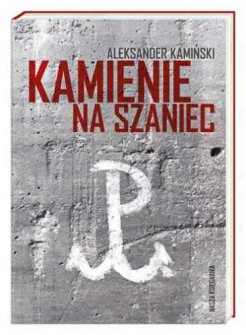
We don't have a list of films or reading material for research projects. Students choose their own materials to gain specific knowledge. Just as "Stones for the Rampart" is a popular book for the resistance movement, we don't have any specific reading material that students could read while preparing for a project on communism.
However, we do have a lot of films. Ms. Beata recommended Wajda's "Man of Marble," although it will be a difficult film for many students and won't fully help them acquire or consolidate specific knowledge. I believe that students can understand everyday life during the communist era through Polish comedies (e.g., "I Don't Like Mondays" or "Teddy Bear") and TV series (e.g., "Alternative 4"), watched TOGETHER with their parents or grandparents (they will need explanations). For topics about the role of the Church, I once recommended films about Father Jerzy Popiełuszko, but these are currently very difficult for students.
Students can, however, independently understand and experience the films "Leave No Trace: The Case of Grzegorz Przemyk" or "All That I Love." I emphasize again that students do not need literature or film for support. Sometimes short documentaries, a less detailed history textbook, or information from Wikipedia or Googled by the student will better present the communist era. A conversation with family in Poland—grandparents or uncles—about the reality in Poland is also invaluable! Perhaps some family heirlooms? Or a game?—for example, "Kolejka" (Queue)?
What is the research project about? How many pages does it have? Is it graded?
Students must independently prepare for one of four topics:
resistance during World War II,
communism,
tourism,
racism.
Each topic has subtopics that further elaborate on the topic. Students must consolidate the knowledge they have acquired to demonstrate it on exam day (Paper 1). In the test paper, students will be given a topic on which they must write an essay of at least 300 words. They will also receive one textual source material, which they must analyze in their essay, but also add their own knowledge.
Of course, this is a graded piece of work – up to 40 points can be awarded – up to 10 for source analysis, up to 20 for analysis based on their own knowledge, and up to 10 for the linguistic aspect of the essay. The essay is part of Paper 1, which has the highest point and percentage value for the overall Matura exam grade.
Who determines the reading and film list?
If you're referring to the reading and film list for Paper 2, it was determined centrally by Polish AQA collaborators/examiners in 2018. This is a fixed list, applicable every year. The reading list includes: "Tango" by Sławomir Mrożek, short stories by Jarosław Iwaszkiewicz: "The Birch Wood" and "The Maids of Wilko," and the novel "Ashes and Diamonds" by Jerzy Andrzejewski (Important: the book, not the film! The film presents only one plot line of this novel). As for films, the students choose between "Katyń" by Andrzej Wajda and "Blind Chance" by Krzysztof Kieślowski.
If, however, you're referring to readings or films for research projects, there's no such list. Everyone can (but doesn't have to) find a book or film that fits their chosen topic. However, I emphasize that in these cases, the historical context is important, not the fictional world presented in the film/book.
As a teacher, I'm also not a fan of "racism." One of my students has trouble finding supporting materials.
I'll explain my "dislike" of this topic – it's the least factually specific (because what dates, names, events are there to include?), and it's difficult to find textbook resources for it. But it can be a lifeline if a student doesn't find the essay topic for their chosen research project relevant – and that can happen. When it comes to racism, we often slip through certain linguistic resources (vocabulary related to discrimination) and redirect "Polish racism" towards anti-Semitism.
Where can I find supporting materials? Please look for an analysis of Allport's pyramid and analyze the structure of national minorities in Poland – since regaining independence. Examples of racist acts and the fight against racism are most easily found on the website jużniewiecej.org. You can also delve into Polish history and show our country as multinational and open to others, even at a time when Europe was burning at the stake. I recommend that your students also delve into the stories of defenders of people of color, and for me, Tadeusz Kościuszko and Cyprian Kamil Norwid are always excellent examples.
We recommend the book "Bicycle Through the Second Polish Republic: An Extraordinary Journey through a Country That No Longer Exists."
Why is there a different A-level level in Polish for different countries?
The syllabi for individual foreign language exams are based on a similar formal structure, but AQA announced the details after consultation with Polish examiner representatives. Frankly, the syllabus was met with some protest among Polish communities, but given the choice between accepting it or completely removing Polish from the exam, the choice was obvious.
I openly admit that I was one of those who found the A-Level core curriculum difficult to accept. I believe that certain thematic elements of this curriculum should not apply to us (e.g., Poland and the European Union). I am also very critical of the proposed reading list and project topics. However, we have no say in the matter. We can only support students in choosing (where we have options) those elements of the curriculum that will most contribute to their development, their knowledge of Poland, and our heritage.
Why are colleges reluctant to offer A-Level courses to Polish students?
The main reason is organizational issues – it is an additional administrative responsibility for someone at the school. The second issue worth addressing immediately after schools' first "NO" to the possibility of taking Polish is the FACT THAT THERE IS NO ORAL EXAMINATION IN THE POLISH LEVEL. Knowing how much it costs organizations to find examiners for the Polish GCSE oral exam, schools are immediately hedging their bets, preferring not to offer students the opportunity to take the exam. So, let me emphasize – there is no oral exam!
Schools are also simply unsure whether a student will be able to adequately prepare for Polish language exams outside of school. Therefore, it's worth making someone aware that the student has support from the Polish community school or the Polish teacher with whom they are preparing. Students also have the opportunity to demonstrate their expected score by, for example, participating in a mock exam organized by the Teachers' Club. The certificate they receive after the mock exam has both Polish and English versions, and the report will allow the student to improve their skills in the areas described in the post-mock guidelines.




 English GB
 Polski